
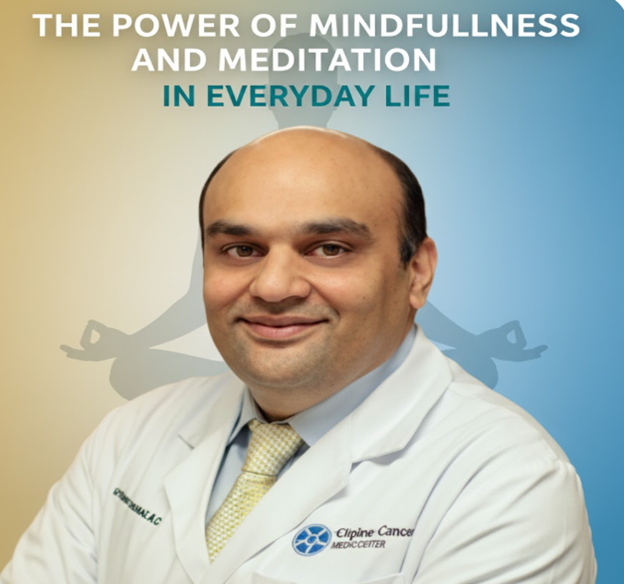
As a medical professional and having worked for many years to help patients overcome the most difficult stages of their lives, I have personally experienced how inseparable the mind and body are. Gradually, I understood that healing is also based on medical therapy, mindfulness and meditation but it also depends on emotional balance and sharpness of mind.
The knowledge provided motivated me to explore the world of mindfulness and meditation, which has changed the lives of the way I live, work, and assist others in their daily lives.
Mindfulness is not just a fad, but a lifestyle. Meditation is not just sitting on the floor and doing nothing and making no noise; it is scientific, systematic, and has quantifiable influences. A combination of these practices can help decrease stress, help focus, and become more emotionally resilient.
I want to make people realize that mindfulness and meditation are not some complex practices, but they are something that can be used by every person in their everyday life.
Understanding The Essence of Mindfulness
Mindfulness refers to the art of complete presence. The concern is that in the busy world today, our thoughts tend to be divided, either thinking of what has happened or what we wish to happen, or our thoughts are also divided because we are charged with various responsibilities at the same time. Such persistent noise of the mind may exhaust our energy and take a toll on our health.
The simplicity of mindfulness is something that I like. It also teaches us to take our time and pause, check our thoughts and feelings without a sense of judgment. Such a mild awareness will aid individuals to get out of these unhealthy thinking patterns, get back to their emotional stability, and enhance the sensation of inner calm.
Some medical studies have established that mindfulness reduces stress hormones and improves sleep quality as well as thinking performance. I have observed that in the clinical setting, patients have been able to deal with anxiety, chronic pain, and emotional distress better when mindfulness is incorporated into their practice.
Why Meditation Matters in Modern Life
Meditation is a formalized approach to mind training. Although mindfulness can be observed in any place, formal meditation consists of a special time spent in silence on introspection, technique breathing techniques, and mental calmness. Such a difference can be made by just several minutes a day.
According to scientific studies, these always benefit in:
- Reduced stress and anxiety
- Improved concentration
- Improved emotion management.
- Enhanced immune function
- Enhanced integrity to everyday stress.
Self-reflection is also available during meditation. It allows us to get a better idea of how we react, feel, and what our strong points are. When I speak to other people as a physician, I usually tell them that meditation does not imply having to take out thoughts; it only teaches people how to live with thoughts in a way that is healthier.
My Personal Journey with Mindfulness and Meditation
During my medical profession, I assisted numerous patients and families who were going through highly emotional cases. Eventually, I realized the need to take care of my personal mental and emotional well-being. That was a revelation that led me to adopt mindfulness and meditation in my practice and professional life.
The practices made me remain grounded in the hardest working days, be able to converse with others in a much kinder way, and have clearer judgment. But the most important thing they helped me do was to be able to attend to patients in a composed manner without being overly emotional, as is the case with many individuals during hardships.
Since I slowly started sharing these methods with others, I would see myself witnessing the effect of such simple things as mindful breathing or a few minutes of daily meditation positively influenced the well-being of a person. The fact that people feel brighter, better focused, and more hopeful after practicing this confirmed my faith in the effectiveness of such practices.
Simple Mindfulness Habits Anyone Can Adopt
To reap the benefits of mindfulness, one does not need a special arrangement or time of free work. Minor, regular routines tend to result in the most significant changes.
- Mindful Breathing
Breathe slowly, deeply for a minute. Attend to breathing in and breathing out. This routine takes immediate effect in relaxing the nervous system.
- Mindful Eating
Be mindful of food taste, texture, as well as smell. The slow pace of eating will increase the level of digestion and facilitate a more articulate enjoyment of every meal.
- Mindful Walking
Walk without rushing. Be aware of what you are doing, the world around you, and your feelings. A brief conscious stroll can improve your mood.
- Daily Reflection
Take some time to think about your day at least once a night. Give credit to the things that were right, what could have been better, and what you are thankful for.
Creating A Balanced and Fulfilling Life
Mindfulness and meditation are no longer wellness tools but effective tools of life. They will be able to enable people to develop emotional resilience, enhance their relationships, and eliminate daily stress. These practices would provide an individual with a method of living with more clarity and peace, no matter whether the patient encountered a health issue, is a student, or a working professional.
It is my pledge to help people live better and healthier lives. By being aware, inhaling, and at rest, we can all be invited to live more meaningful, grounded, and complete lives.