
Being a professional oncologist, I have witnessed the strong interconnection between physical health, emotional well-being, and community connection first-hand. Community engagement has developed to be among the strongest forces in achieving both the overall health outcomes and a better quality of life in the United States of America.
Active involvement in community life can positive impact on the lives of an individual or group, and this can be achieved through volunteering, a neighborhood program, or a patient support group.
The Power of Belonging and Social Connection
Community involvement provides that which medicine does not always provide, and that is the sense of belonging. Where being isolated and subjected to stress is a prevalent condition in the world, finding others with the same objectives and activities gives a sense of aim and emotional strength.
The research conducted by the American Psychological Association (APA) has revealed that individuals who can regularly participate in community activities report experiencing less anxiety and depression. When one feels a part of a network that embraces him/her, he/she feels that emotional strength that leads to his/her general mental and physical well-being.
I have been able to see as a health practitioner that patients who are socially related tend to respond better to treatment. The presence of people that love, share and encourage them is what motivates them: they feel great being in a premise where healing is not within the hospital walls but also the presence of others who care.
Strengthening Mental Health Through Volunteerism
One of the most significant ways of interaction with a community is volunteering as practiced by Americans. The facts stated in the AmeriCorps and the U.S census report show that more than 60 million Americans volunteer every year and are giving billions of hours of service to make a difference. On top of the social benefits there are psychological benefits of volunteering.
Volunteers get a helper high that makes them feel better and less stressed often because endorphins and dopamine release. Altruism offers a feeling of accomplishment and order especially to people who have recovered due to trauma, illness, or loss.
Intergenerational understanding is also promoted by community-based volunteering. When the elderly and young people join forces in initiatives like health promotion, clean ups or any other layman program, then the bond between the two social groups becomes stronger, and respect levels are increased between the two parties.
Building Healthier Communities Through Collective Action
Neither is health nor wellbeing accomplished in isolation. Most community programs in the USA have been critical in enhancing health outcomes among the people. Fitness, nutrition and preventative care programs are thriving in towns and cities throughout this country.
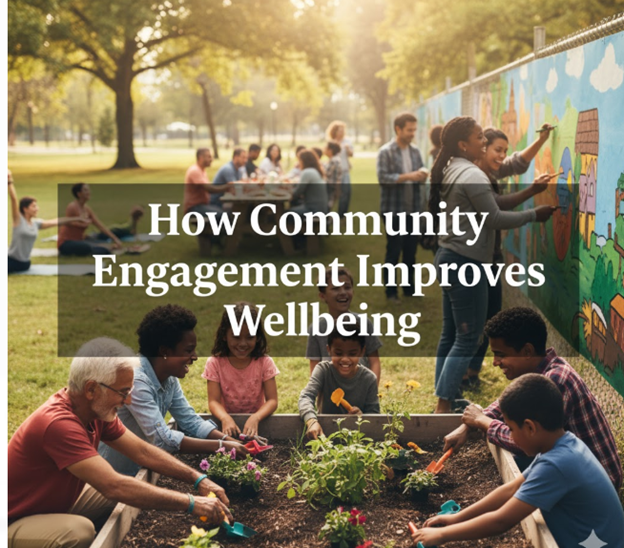
I can give the case of community gardens that not only encourage accessibility to fresh produce, but also provide a source of socialization to engage in the community in cooperation and learning. On the same note, walking clubs and wellness fairs which involve the locals make them stay active, watch their health and spread knowledge.
Community engagement can be disruptive in oncology. Patients, caregivers, and medical professionals are connected with each other in ways that matter due to cancer support groups, awareness campaigns, and fundraising events. These similarities alleviate emotional distress, dispersion and instill hope which are key elements of comprehensive remedy.
Enhancing Emotional Resilience Through Shared Purpose
Emotional resilience is one of the most significant tools of community engagement. In investing in something bigger than them, individuals develop the feeling of mission which can be used to overcome the difficulties of life in a positive light.
According to a study released by Harvard Health, individuals that engage in community-related activities claim greater life satisfaction and a longer life. Social support and the psychological benefits of helping others are credited with this positive influence to a great degree.
With the patient population in my professional practice, the ability to engage in supportive communities, be it an advocate, a mentor, an artist collaborator, has shown superior coping skills and emotional stability in all participants who undergo such health experiences.
The Role Of Healthcare Professionals In Community Wellbeing
The healthcare providers have a crucial role to play in fostering community engagement. Through our collaboration with local entities, clinics, and learning institutions, we will be able to raise awareness, preventative care, as well as emotional support.
This is because I, as a medical professional, have always felt that healing goes much deeper than the clinical treatment. Real health is about caring, learning and a sense of collective accountability. By coming together to achieve health literacy and take care of each other, communities decrease inequalities and build the environment in which all people can live prosperously.
It is important to encourage the patients to participate in wellness walks, educational seminars, or volunteering in the community not only to make them feel empowered but also to close the distance between medical services and life. It is a partnership between individual and healthcare systems that can change how we perceive and attain population health in America.
A Path Toward A Healthier, More Connected Future
Social participation does not just apply to community engagement but it is the pillar of national wellbeing. It fosters sympathy, lowers feelings of loneliness, and enhances the greater resilience to take problems on. Far and wide throughout the USA people are finding out that small acts of kindness, cooperation, and purpose produce significant ripple effects on both mental and physical well-being.
I am also inspired by the myriads of ways people help each other even though I am focused on enhancing human life to a greater extent. The efforts, be it in the form of healthcare outreach, education, and even in the form of friendly gestures of a neighbor all lead into a healthier and happier society.
As we decide to associate, donate and nurture, we not only improve our personal welfare, but also the welfare of our country as a whole. Engagement with the community is not a simple social good, it is a healing power, and the force that starts with empathy and develops through actions of the whole community.